





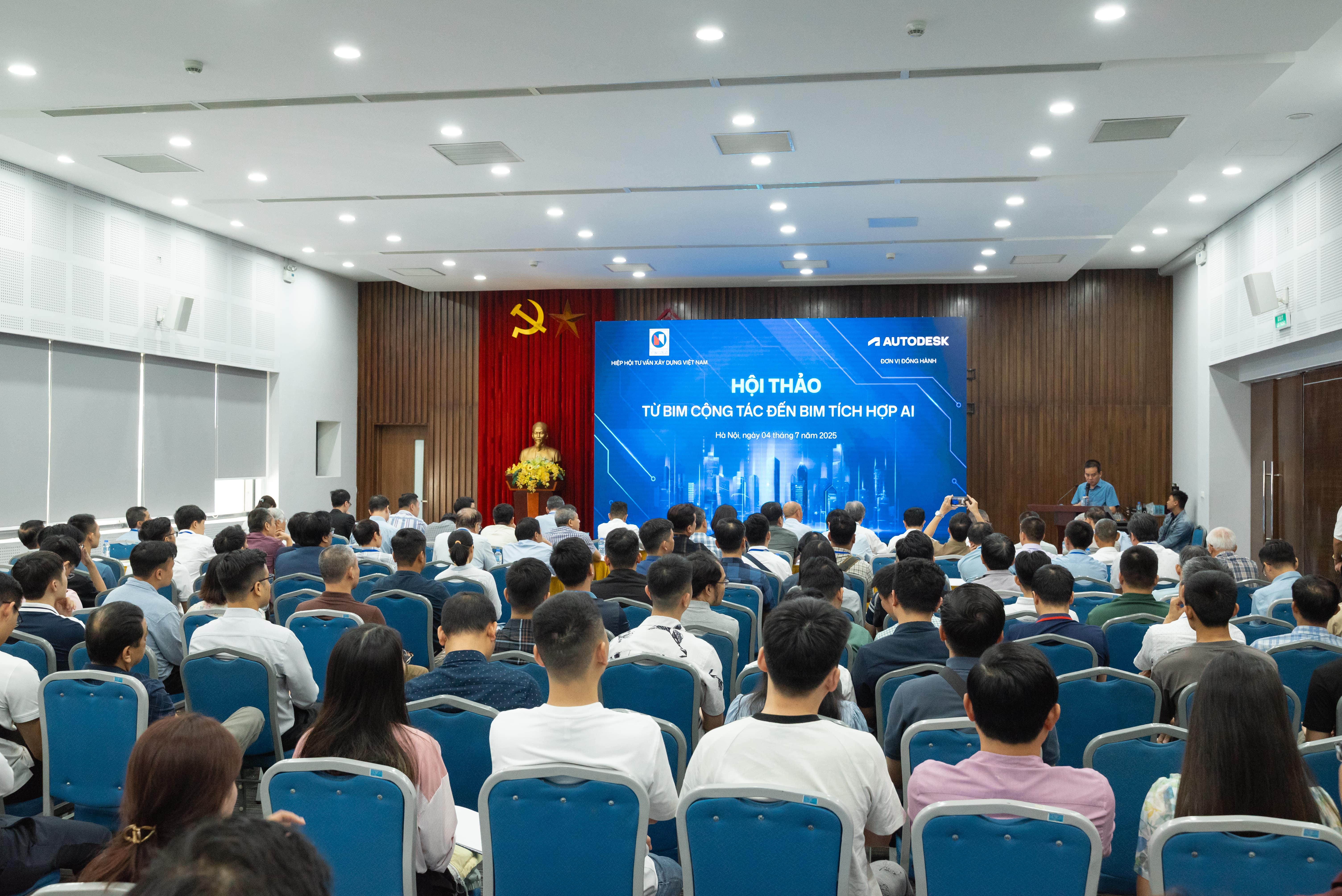
On the morning of July 4, 2025, with the companionship of Autodesk, the Vietnam Engineering Consultant Association organized a conference with the theme “From collaborative BIM to AI-integrated BIM” in Hanoi (headquarters of Vietnam Construction Consultant Corporation – VNCC) attracting nearly 200 leaders, engineers, and architects from Association members nationwide. Mr. Le Huy Long, Deputy Director of the Department of Science, Technology, Environment and Construction Materials and Mr. Pham Nhu Huy, Deputy Director of the Department of Economics – Construction Investment Management – Ministry of Construction also attended the conference.
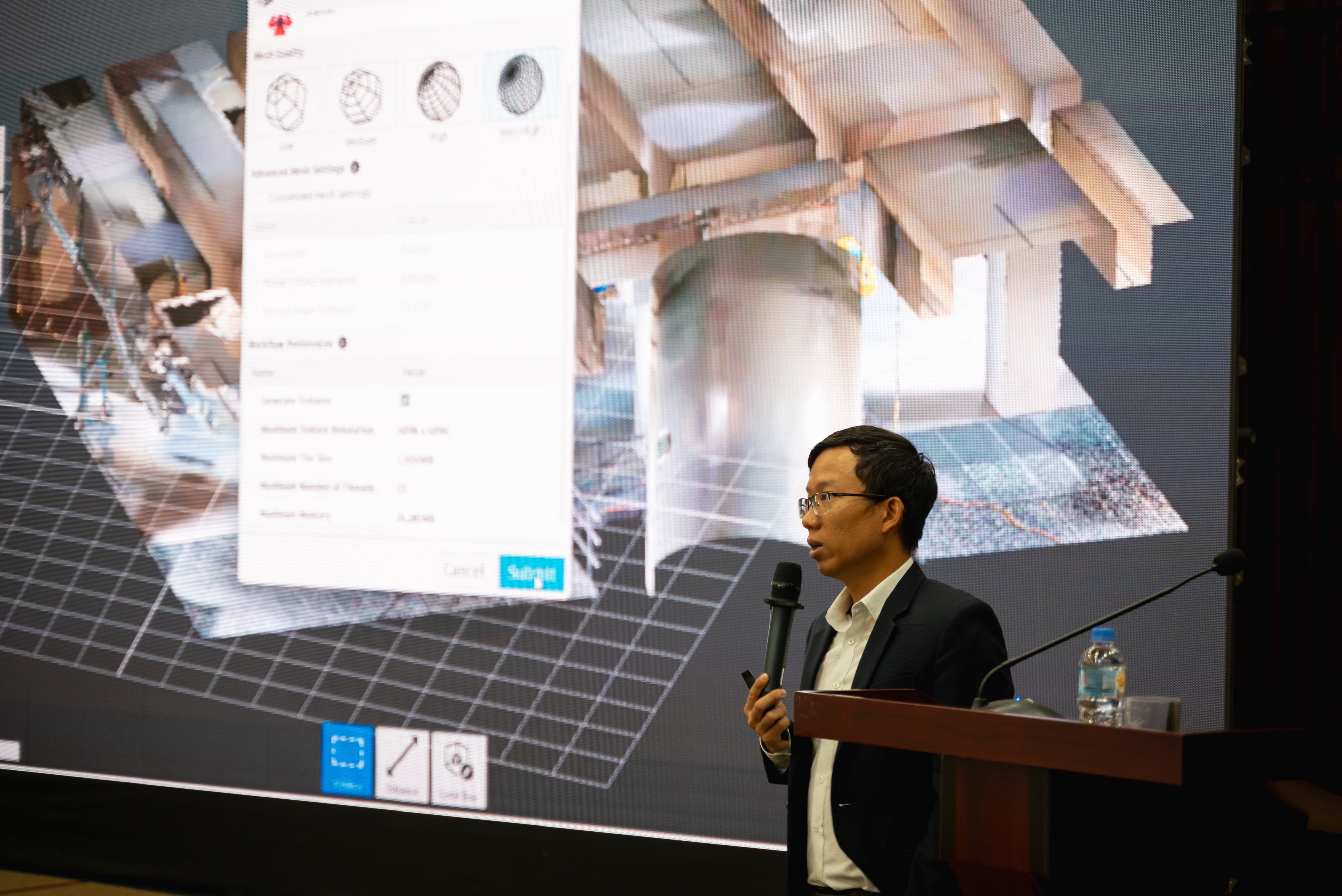
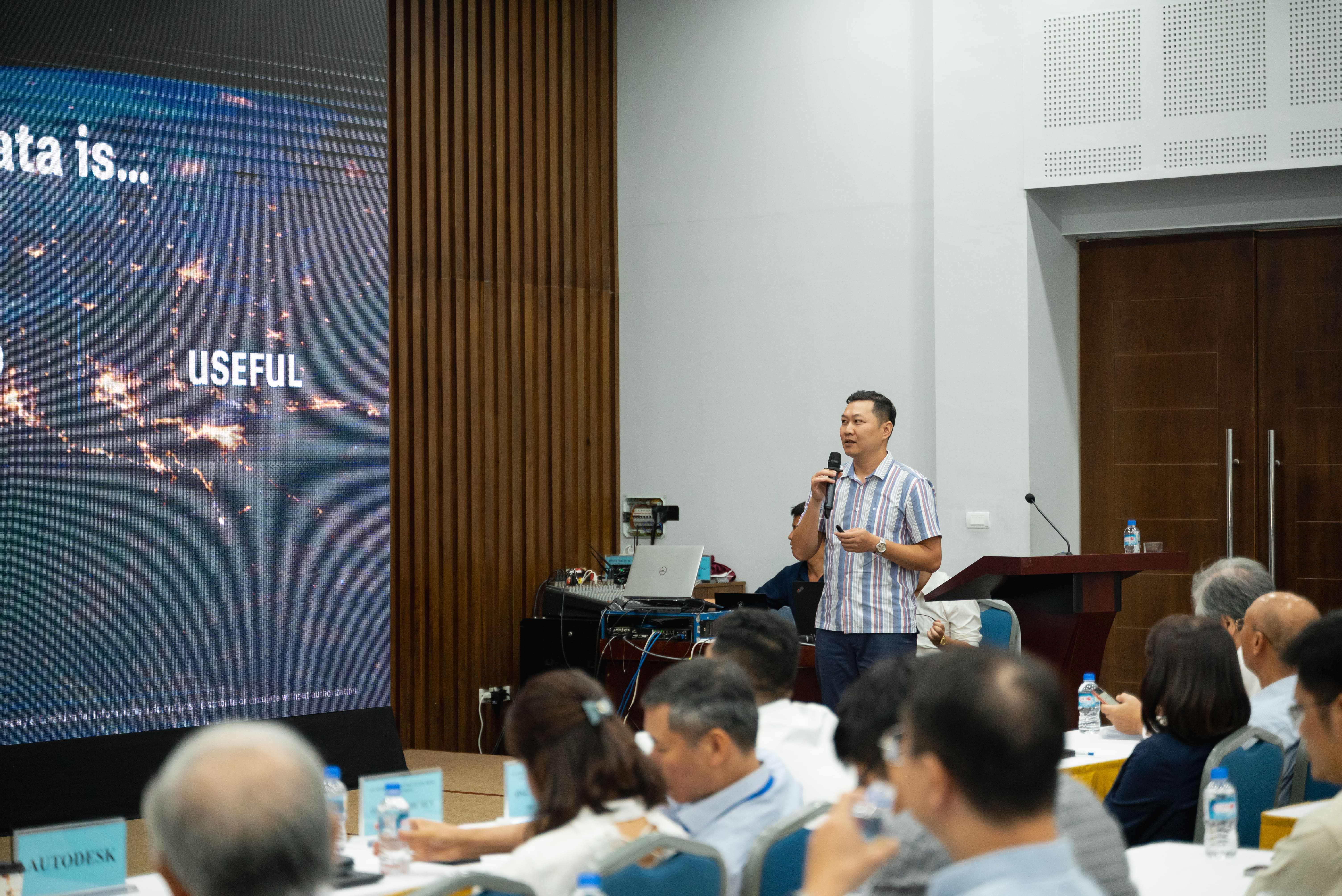
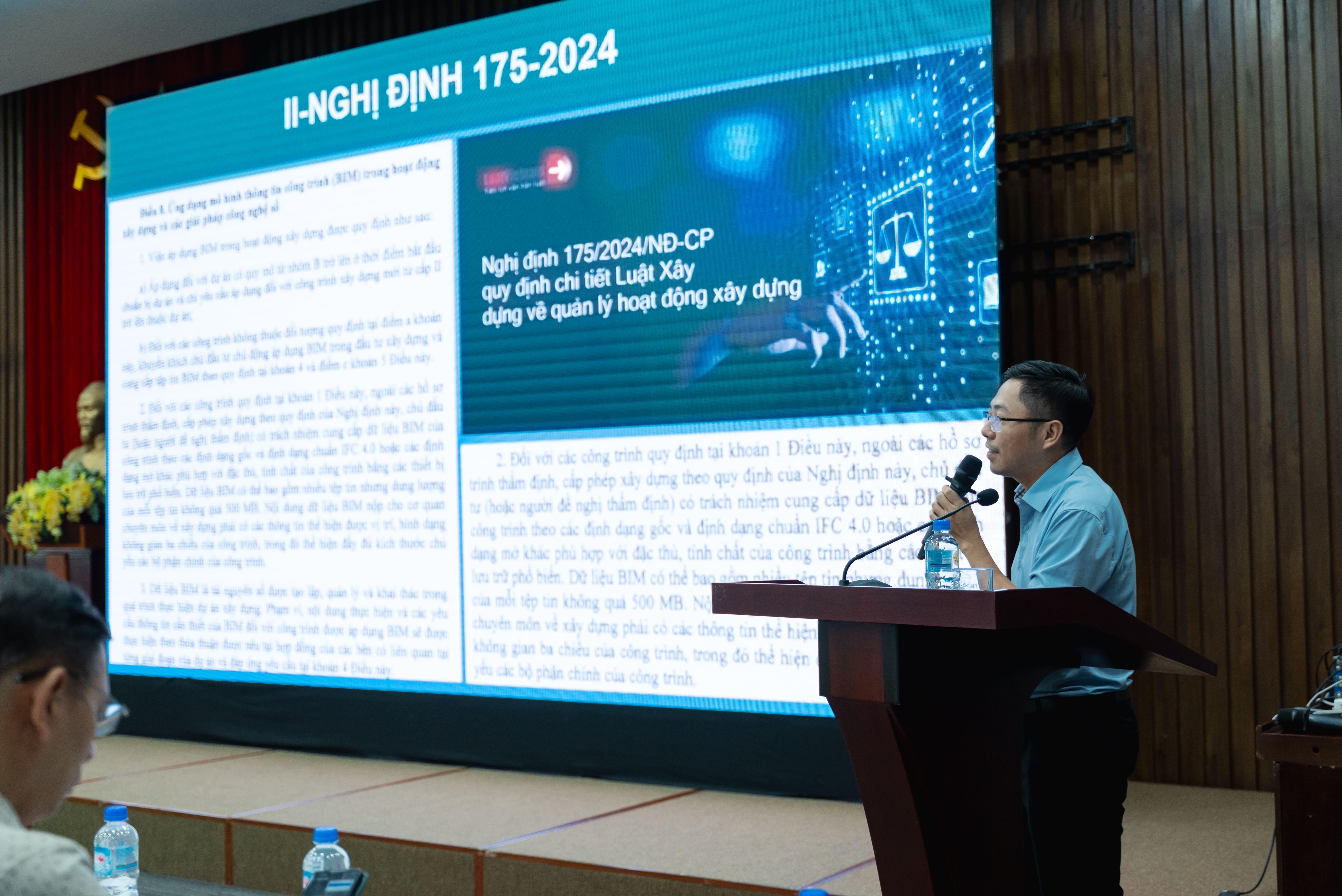
Presenting at the conference, Mr. Dao The Son, representative of VNCC, shared the application of BIM in projects implemented by VNCC. Focusing on the topic “Original format and IFC standard format for BIM data in practice”, the representative of VNCC shared through VNCC’s practical BIM application projects, issues that need attention and continue to need guidance from management agencies in providing BIM data of works in original formats and IFC 4.0 standard formats or other open formats suitable to the characteristics and nature of the works according to Decree No. 175/2024/ND-CP dated December 30, 2024 detailing a number of articles and measures to implement the Construction Law on construction management.
Esri Vietnam representative, Mr. Do Cong Chung shared that the application of Geographic Information Model (GIS) has been applied for many years in the world. The architectural and engineering industries are moving further with drawings using 3D models of projects based on community interests during the construction and design process. BIM has become a process of increasing efficiency and saving costs through the creative combination and use of detailed information about built assets throughout their life cycle. Public asset improvement projects are initiated with GIS information to help publish designs and combine with BIM information flows back into the operational life cycle to perform analysis and planning. However, according to the representative of Esri Vietnam, when integrating GIS – BIM applications, it is necessary to pay attention to the problems that occur such as: different coordinate systems; difficulty accessing the latest updated GIS information for accurate context or current conditions; problems with data duplication and data conflicts because of the file-based workflow used for data exchange; difficult workflows and loss of a significant amount of data when converting BIM information into GIS data layers.

At the end of the conference, President of VECAS Nguyen Thi Duyen assessed that the application of AI-integrated BIM in the Construction industry is an inevitable and necessary trend to optimize the work process. Therefore, VECAS hopes that in the coming time, there will be more conferences and seminars organized for everyone to share and discuss more about the content of integrating BIM, GIS and AI in the construction sector.